
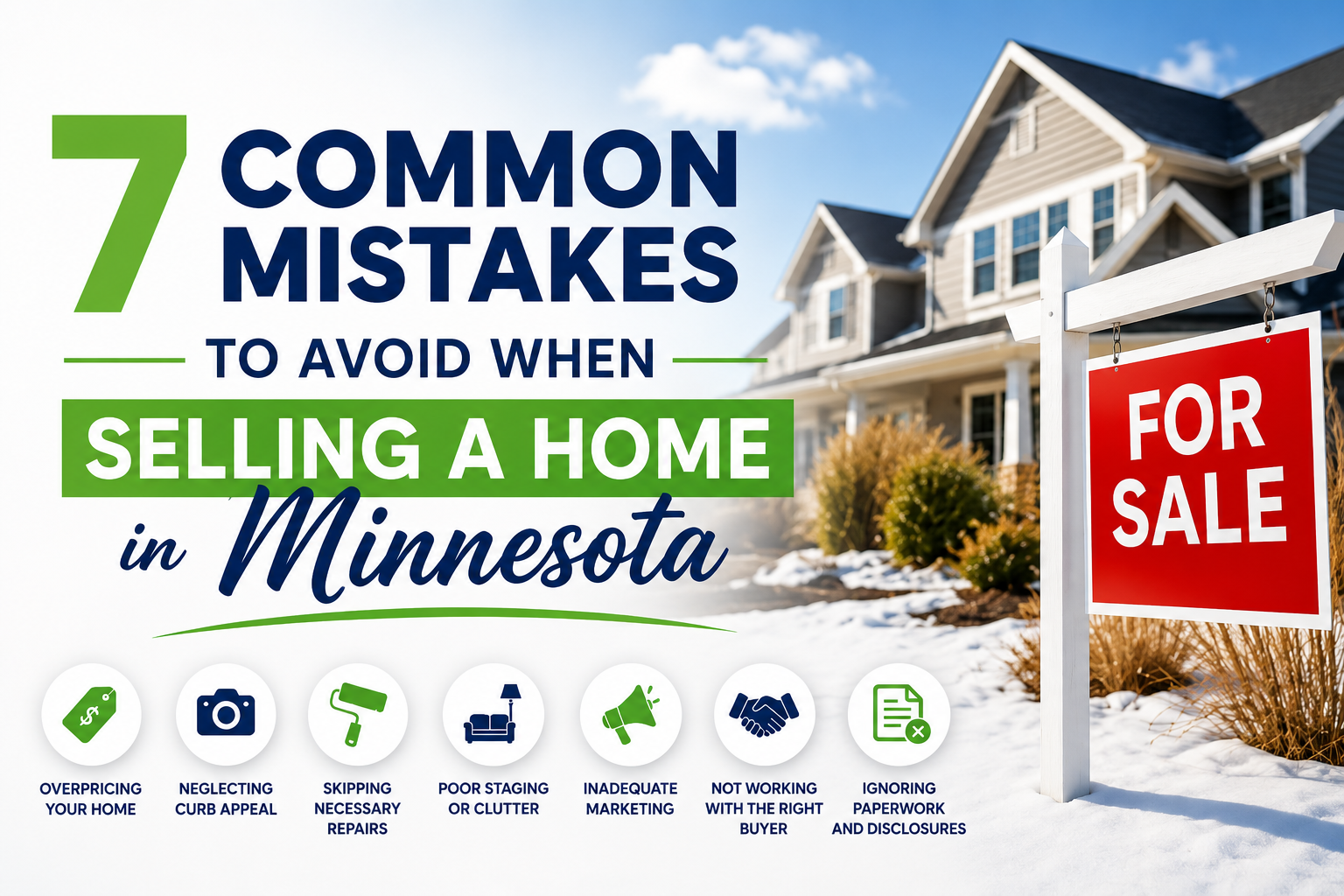
Selling a home in Minnesota can feel straightforward until you’re knee-deep in repair quotes, showing schedules, and offers that fall through at the last minute. Whether you’re selling a Twin Cities property, an inherited house in Coon Rapids, or a home you simply need to move on from, a few avoidable missteps can cost you thousands of dollars and months of stress.
Here are the seven most common mistakes Minnesota homeowners make when selling, and exactly how to sidestep each one.
1. Overpricing Based on Outdated or Emotional Estimates
It’s easy to attach a price to your home based on what a neighbor sold for two years ago or what you feel it’s worth. But the Minnesota market shifts by season and by neighborhood, and overpricing is the fastest way to watch a listing sit untouched.
An overpriced home gets fewer showings, grows “stale” on the MLS, and often sells for less than it would have with realistic pricing from day one. Research recent, comparable sales in your specific area, not just your zip code, before settling on a number.
2. Pouring Money Into Repairs That Don’t Pay Off
Many sellers assume they need a fresh kitchen, new flooring, and a coat of paint before listing. The truth is that most pre-sale renovations rarely return their full cost, and some never recoup a dime.
If your home needs major work, like a failing roof, foundation issues, or water damage, you have options that don’t require you to fund repairs out of pocket. A direct cash sale lets you sell completely as-is, which is one reason homeowners facing major repairs or property damage often skip the renovation gamble altogether.
3. Ignoring Minnesota’s Seasonal Timing
Minnesota winters are real, and they affect how homes sell. Listing during a January cold snap usually means fewer buyers walking through, slower offers, and curb appeal buried under snow.
Traditional listings tend to move faster in spring and early summer. But if your timeline can’t wait for the perfect season, a cash sale removes weather from the equation entirely, since you’re not depending on foot traffic or open houses.
4. Underestimating the True Cost of Selling
The sale price is not the amount you walk away with. A traditional sale typically carries agent commissions of 5–6%, closing costs, staging, and the holding costs of every month the home sits on the market: mortgage, taxes, insurance, and utilities.
On a typical Minnesota home, those costs add up quickly. Before you choose a selling path, calculate your net proceeds, not just the headline price. When you sell directly for cash, there are no agent commissions and the closing costs are covered, so the offer you accept is much closer to the money you actually pocket.
5. Failing to Disclose Known Defects
Minnesota law requires sellers to disclose known material defects, such as a history of water in the basement, mold, or a faulty septic system. Skipping this isn’t just risky, it can unravel a deal or expose you to legal trouble after closing.
Honesty protects you. And if disclosing significant problems makes you nervous about scaring off buyers, remember that direct cash buyers purchase homes with known issues every day, no concealment or cleanup required.
6. Choosing the Wrong Selling Method for Your Situation
Not every seller has the same goal. Some want the absolute highest price and have months to wait. Others need speed and certainty, because they’re facing foreclosure, going through a divorce, relocating for work, or settling an inherited estate.
The mistake is forcing your situation into the wrong method. Listing with an agent can make sense when you have time and a move-in-ready home. But when speed, certainty, and a guaranteed close matter most, a traditional listing can become a source of stress rather than relief.
7. Accepting a Lowball Offer Without Vetting the Buyer
We buy houses signs are everywhere, and not all cash buyers are equal. Some tie up your home in a contract, then renegotiate the price right before closing, or back out entirely once you’ve waited weeks.
Before accepting any cash offer, vet the buyer. Look for verifiable local reviews, a real track record, and transparent terms with no surprise fees. A trustworthy buyer makes a fair, no-obligation offer and closes on the date you choose. You can always compare offers and see how a direct sale works before committing to anything.
Final Thoughts
Selling a home in Minnesota doesn’t have to mean costly repairs, drawn-out showings, or commission checks that shrink your final payout. The key is matching your approach to your goals, pricing realistically, and working only with buyers you can trust.
If you need a fast, fair, all-cash offer with no fees, no repairs, and a closing timeline built around your schedule, that path is available, often within 24 hours.
Frequently Asked Questions
What is the biggest mistake when selling a home in Minnesota?
The most costly mistake is overpricing based on outdated comparable sales. An overpriced listing attracts fewer buyers, sits on the market longer, and often sells for less than a realistically priced home would have from the start.
Do I need to make repairs before selling my Minnesota home?
No. While repairs can help on the traditional market, most pre-sale renovations don’t fully recoup their cost. If you sell directly to a cash buyer, you can sell completely as-is, with no repairs, cleaning, or out-of-pocket expense.
How much does it cost to sell a house in Minnesota?
A traditional sale typically includes 5–6% in agent commissions plus closing costs, staging, and monthly holding costs while the home is listed. A direct cash sale eliminates agent commissions and covers closing costs, so your net proceeds are much closer to the offer amount.
Is it faster to sell to a cash buyer than to list with an agent?
Yes. A traditional listing can take weeks or months and may fall through if financing collapses. A reputable cash buyer can make an offer within 24 hours and close in as little as 7 days, on the date you choose.
How do I avoid a lowball cash offer?
Vet any buyer before accepting. Check for verified local reviews, a proven track record, and transparent terms with no hidden fees. A trustworthy buyer presents a fair, no-obligation offer and never renegotiates the price at the last minute.